Steve Mentz

THE BOOKFISH

THALASSOLOGY, SHAKESPEARE, AND SWIMMING

  • Home
  • Steve Mentz
  • Humanities Commons
  • Public Writing
  • The sea! the sea!
  • The Bookfish
  • St. Johns

Learning to Swim

December 7, 2010 by Steve Mentz 2 Comments

He was probably in his mid-fifties, ramrod thin, with a flash of gray in his dark hair.  His mouth sometimes pulled down to one side, as if caught between a smile and a frown.  He wore the same black bathing suit every time I saw him come to the pool.  I never learned his name.

He told me a little bit of his story one day.  He’d had an accident in the water when he was a boy, about the same age as my kids, who were at the pool that summer to take swimming lessons of their own.  “I almost drowned,” he said, with that pulled-down grimace of a smile.  “And since then I’ve been terrified of the water.”  Now, as an adult, he’d signed up for a summer of private lessons.

We watched him, trying not to stare.  His body froze underwater, muscles clenching & straining & grabbing at nothing.  He wore a full set of water wings & floaties, and his arms and legs churned aimlessly.

He got better, slowly.  At the end of the summer —  during which time Olivia learned to put her face in the water & Ian learned rotary breathing for his crawl stroke — he could support himself w/o floaties.  Eventually he swam, by himself, across the deep end of the pool, maybe 15 feet or so, in 12′ deep water.  I’ve seldom seem anyone so triumphant, or so scared.

I think of this story a lot at the end of the semester.  Learning is painful,  risky, and dangerous — sometimes we teachers forget that.  You have to put yourself in an untenable position — in the destructive element immerse, to borrow Conrad’s language — to make real education possible.

Filed Under: Blue Humanities, E. 110 Fall 2010

Questions and Futures

December 7, 2010 by Steve Mentz 9 Comments

As I wait all day for your set of questions and your speculative look-backs on your not-yet-completed academic careers, I’ll pose a few questions of my own, plus answer the question that Dr Ahmad dodged a few weeks ago.

Questions inside of STJ:

1.  Should all students have a blog? I’ve found, this semester, that keeping a blog has been great for me, in terms of creating a forum for my own academic memoir-ing and notes.  I do wonder, though, if rather than having you all read & comment on my blog, if I should not have had you each create your own & keep them throughout your graduate career here (and after, perhaps).  I know some of you are already doing this, but I’d like to have your thoughts about making it a requirement for this course.

2.  Who’s is and who’s out? This course, right now, is a requirement for all DA students & more or less off-limits for MA & BA/MA students, though Dane & Gavin managed to sneak in.  What are your thoughts about this division of our student populations?  Do you like it this way?  How would you feel about opening the course up to all MA students?

Outside STJ:

1.  Scholarly organizations: I’m a member, or have been, of the Modern Language Association, the Shakespeare Association of America, the Renaissance Society of America, the Group for Early Modern Cultural Studies, the Society for the History of Authorship, Reading, and Publication, the Society for the Study of Science, Literature, and the Arts, the Maritime Historical Society, and I’m sure a few more.  How many of you know what scholarly orgs are in your sub-fields, and how many are already members?  Should we spend time on this in class?  These organizations are your intellectual conduit for the world beyond STJ.

2.  STJ alums: One of the liveliest recent stories about a STJ MA  alum is Paul Devlin’s recent writing in slate.com, among other places, in response to a new book on rap lyrics, which Paul claims have been mistranscribed.  Paul’s a PhD candidate at Stony Brook now.  How much use would it be to you to have some contact with recent grads of our program?

My 30-year legacy:  It’s a tough question, and I don’t really blame Dr Ahmad for ducking it a few weeks ago, but I think that 30 years down the road I’d like people to remember my contributions to early modern studies in terms of reaching toward a  more flexible notion of style in the writing of literary criticism, and also a more capacious sense of public outreach for literary critical work.  I’m somewhat optimistic that we’re moving toward a more open form of of diachronic historicism in literary studies, and I’d like to be a part of that.  My meaningful outreach will likely be in ecological and maritime circles, but one of the great things about being a career teacher is that I hope to touch any number of other sub-fields through my students as time passes.

Filed Under: E. 110 Fall 2010

Graduate Study for the 21st Century

December 7, 2010 by Steve Mentz 1 Comment

Too late for this year’s syllabus, but perhaps in time for your holiday shopping, I found Gregory Colon Semenza’s wonderful book on how to thrive as a grad student in these difficult times.   It came out in 2005, so before the current economic crisis, but it’s a very useful guide to some of the unspoken rules and norms of the profession, esp in terms of what you need to do when choosing an advisor, writing a seminar paper, going to conferences, and publishing articles.  Not to mention things like teaching and service.  It’s thorough, sane, and full of excellent insider information.

You may find Semenza’s standards high — he advises publishing at least two articles before finishing your doctoral degree, and establishing a daily routine of working at least 10 hours each weekday plus some extra hours on the weekends.  He doesn’t seem to have to work toward rent or food while a grad student, perhaps because he lived in State College, not NYC.  But I strongly recommend it for anyone uncertain about what professional goals grad students should be setting for their academic work.

I would think about assigning this book the next time I teach this class.

Filed Under: E. 110 Fall 2010

Saint-John Perse

December 5, 2010 by Steve Mentz Leave a Comment

…For us the Continent of the sea, not the nuptial land with its perfume of fenugreek; for us the free space of the sea, not this earthly side of man, blinded by domestic stars.

Selected Poems, ed. Mary Ann Caws

(Train reading on the way home from the TemFest…)

Filed Under: Blue Humanities, Sea Poetry

TemFest II

December 3, 2010 by Steve Mentz 1 Comment

It’s tem-festuous weather here in DC, with a nip of winter in the wind.  An excellent day for an academic event & some meditation on storms.

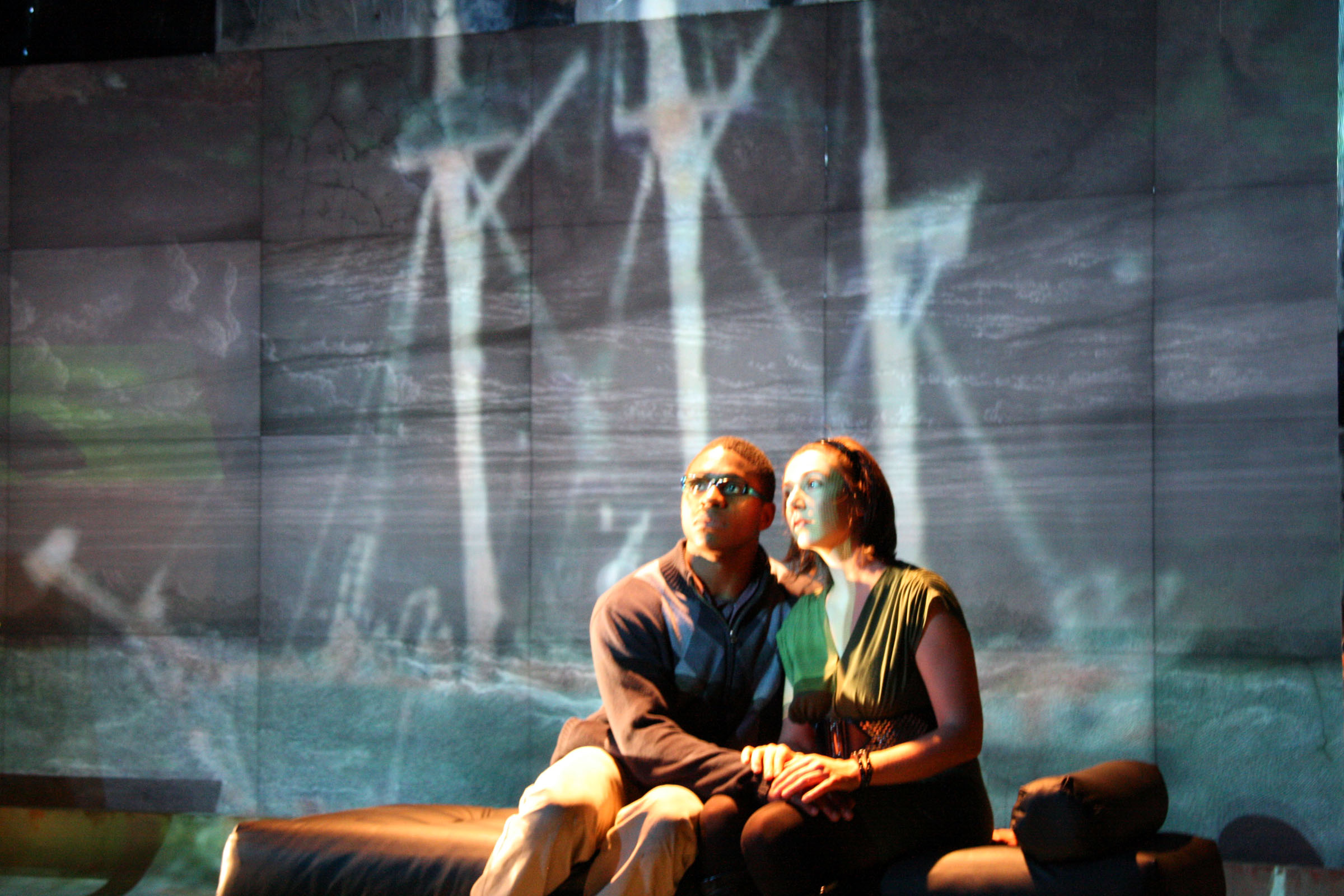
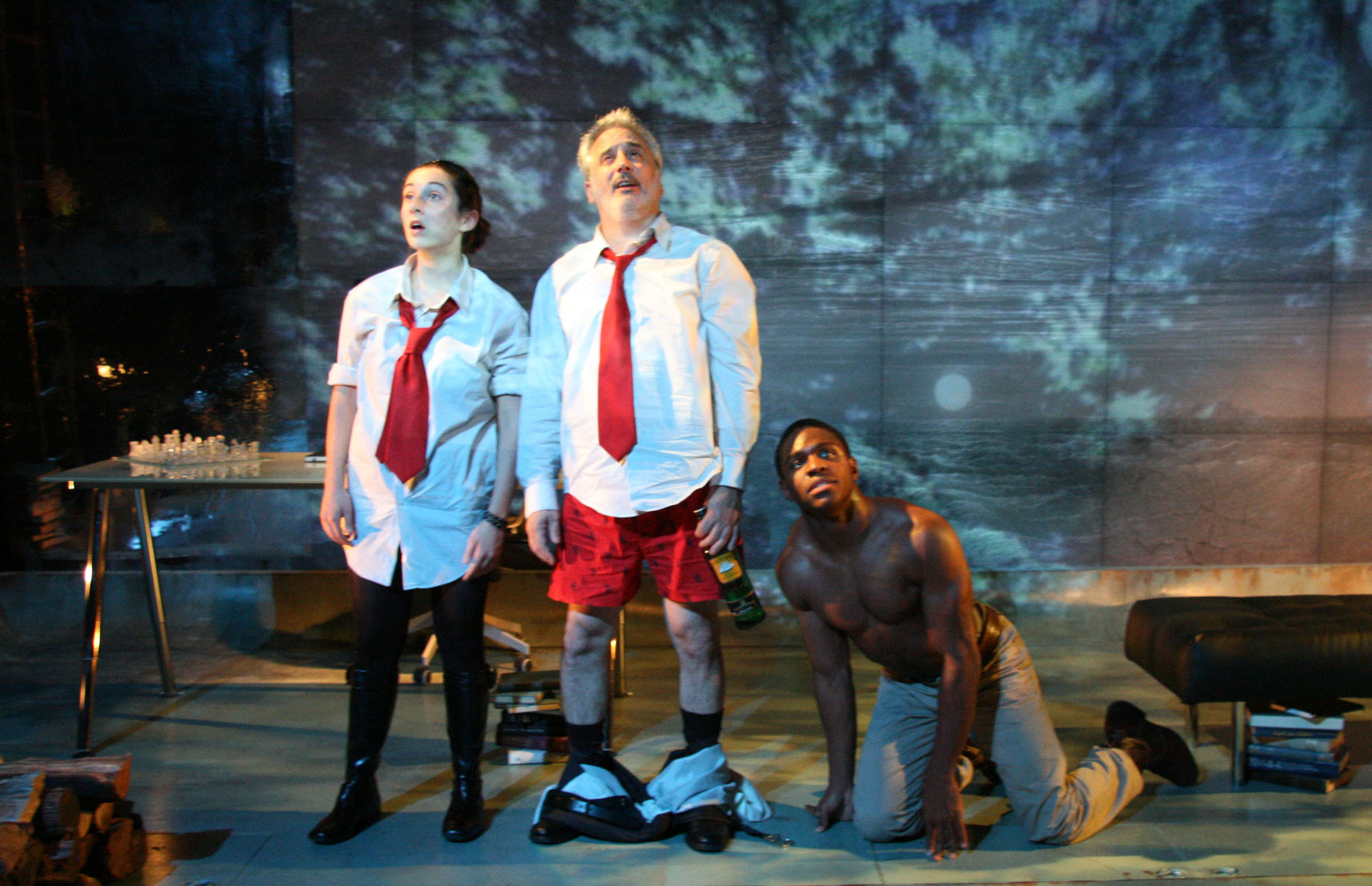
My talk yokes together a new production of The Tempest in San Francisco, an ancient epic about the nature of the universe, a poem written in French in 1955, and some final attention to fathers and daughters.

I’m looking forward to it. 

Filed Under: Uncategorized

A storm of wind

December 1, 2010 by Steve Mentz Leave a Comment

No rain right now, but a fantastic gale off the Sound.  The sound and smell of the wind is amazing.  It’s warm air for November, hurling and tumbling itself onto shore.  A half-dozen seagulls hover stationary above the beach, held in place by the onrushing wind.  While I was watching, one dipped into the seaweed below — it’s about half-tide and ebbing, with mounds of fresh seaweed piled up from earlier this morning — to snatch a quick bite.

Conrad knows about this sort of thing:

If you would know the age of the earth, look upon the sea in a storm. The grayness of the whole immense surface, the wind furrows upon the faces of the waves, the great masses of foam, tossed about and waving, like matted white locks, give to the sea in a gale an appearance of hoary age, lustreless, dull, without gleams, as though it had been created before light itself.

Filed Under: Blue Humanities

The water is rising…

November 26, 2010 by Steve Mentz Leave a Comment

A less happy story about flooding  in Norfolk, VA.  Te state attorney general is trying to prove that global warming is a hoax while town residents watch the tides before they park each night.  Perhaps each, in its way, is reacting to climate change?

Filed Under: Blue Humanities

Found at Sea

November 26, 2010 by Steve Mentz Leave a Comment

A nice Thanksgiving story about three teenagers rescued in the South Pacific after being given up for lost after 50 days.  Twenty coconuts, rainwater, fish, and an unfortunate seagull kept them going as they drifted 800 miles away from the Tokelau Islands, a very remote part of New Zealand.

Filed Under: Uncategorized

The wet and the dry

November 24, 2010 by Steve Mentz 4 Comments

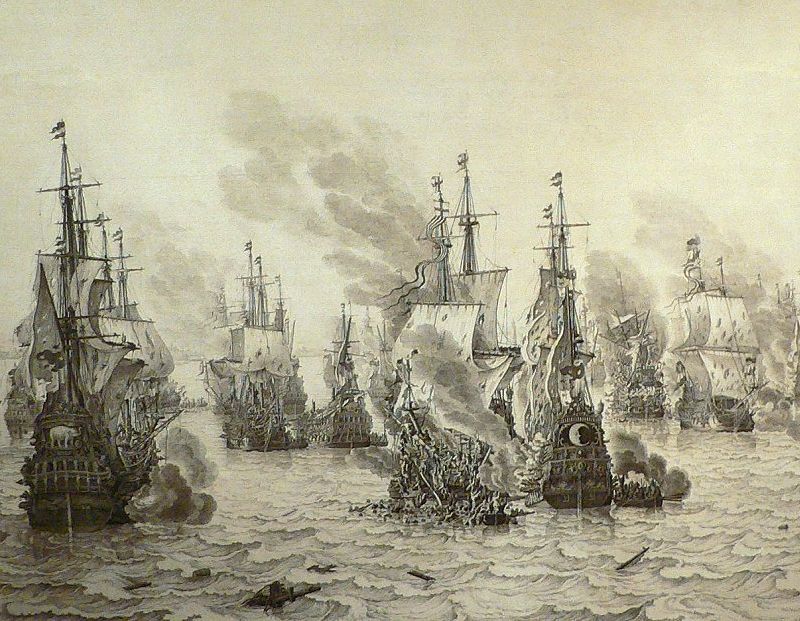
Thinking back on a great weekend in the van de Velde room, I’m going to report a version of my westbound flight ruminations and espirit d’avion.  Trying to process the whole range of shipwreck representations we looked at, from early Buddhist images to post-modern narratives and contemporary art, I want to hazard a theory about two discursive modes in presenting shipwreck, the wet and the dry.

Wet narratives present disorder, disorientation, rupture, chaotic and variable experiences in which the usual ways of doing things get broken or fragmented.  I think of the sailors in “The Wreck of the Amsterdam,” especially those in the water, and Emma’s “potentiality of failure” in her readings of Ader and Dean.  Also a haunting sentence in Sarah’s talk on Buddhist narratives that I don’t have a good source for: “we don’t know the fruits of our deeds.”  The lines from Verne that Stephen quoted, which I also have to track down, describe a “wet” revision of the old story of looking at a wreck.  I also might add the instants of immersion in the early modern stories Joe & I each explored.

Against these immersion tales, we also heard about a powerful generic infrastructure of “dry narration,” which attempts to make sense and meaning out of shipwreck.  Lucretius’s “shipwreck with spectator” paradigm, as several of us noted via Blumenberg, uses shipwreck to emphasize the stabilty created by watching (reading, viewing) wrecks.  In Blumenberg’s words, which mesh nicely with my reading of Pet and Thacher, “shipwreck is a didactic drama staged by Providence.”  Beyond the religious frames, Christian for the early modern panel & Buddhist for Sarah, this “drying out” of shipwreck and deriving of lasting meanings from it assumes a variety of other forms: literary canon-formation (Ranja), imperial  or popular identities (Carl,  Kirsty), American masculinity (Robin), Cold War nationalism (submarines), etc.

My take-away from this perhaps too schematic summary might be that the wet-dry tension works as continuum rather than binary, that even the most doctrinaire sermonized version of a shipwreck narrative has at its core the “wet’ experience of radical disorientation and exclusion, even if temporarily, from dry earth.  I suppose that’s what I meant by thinking about shipwreck as a response to and representation of radical cultural change.  Perhaps also we can trace a historical shift from narratives that cling to “dry” visions like so many spars, in the religious narratives that we explored, and those that revel in the wet for its own sake, like Ader’s conceptual art or perhaps some of the paintings (which have a different attitude toward narrative progress than stories do).  Though I’d also say that even an avowed explorer of the fragmentary and incomplete like Ader (or Life of Pi, perhaps) still posits, at least on the imaginary or unreachable level, a “dry” or “miraculous” counterforce, a hoped-for order glimpsed through and also beyond immersion.  And the more overtly religious narratives, even Herbert, also invoke the frisson of inhuman chaos.

I might have more to say about Life of Pi, since I like it more than Michael does (though this side of idolatry, still).   I certainly take his point about the hash Martel makes out of his many acknowledged and unacknowledged sources.  But I wonder — surely one challenge for any shipwreck writer in the past few millennia is that these tales are so thoroughly already-written?  The Booker committee may have praised Pi, foolishly, for originality, but surely we needn’t judge by such criteria?  I wonder if the awkward but emphatically open structure of the novel’s ending(s), for me the weakest parts of the book, might be attempts to keep the novel inside the “wet” world of shipwreck, rather than succumb to the drying out of narrative closure?

Filed Under: Blue Humanities, Shipwreck

Cutting Ball Trailer

November 23, 2010 by Steve Mentz 1 Comment

Here’s a nice one minute promotional video of the Cutting Ball Tempest, now extended through Dec 19.  Too bad I’m not going to California for Christmas this year!

Filed Under: Cutting Ball

  • « Previous Page
  • 1
  • …
  • 56
  • 57
  • 58
  • 59
  • 60
  • …
  • 70
  • Next Page »

About Steve

Steve Mentz
Professor of English
St. John’s University
Read Bio

Pages

  • Coastal Studies Reading Group
  • Public Writing
  • OCEAN Publicity
  • Audio and Video Recordings
  • Oceanic New York
  • #shax2022 s31: Rethinking the Early Modern Literary Caribbbean
  • #SAA 2020: Watery Thinking
  • Creating Nature: May 2019 at the Folger
  • Published Work
  • #pluralizetheanthropocene

Recent Posts

  • Sentences and Story in Thomas Pynchon’s Shadow Ticket
  • Are the Bennet Girls OK? (West End Theater through Nov 9)
  • One Battle After Another
  • Swim Across the Sound 2025
  • Dream at the Bridge

Copyright © 2025 · News Pro Theme on Genesis Framework · WordPress · Log in